
-
By LIjo James
-
May 29, 2026
- 0 Comment
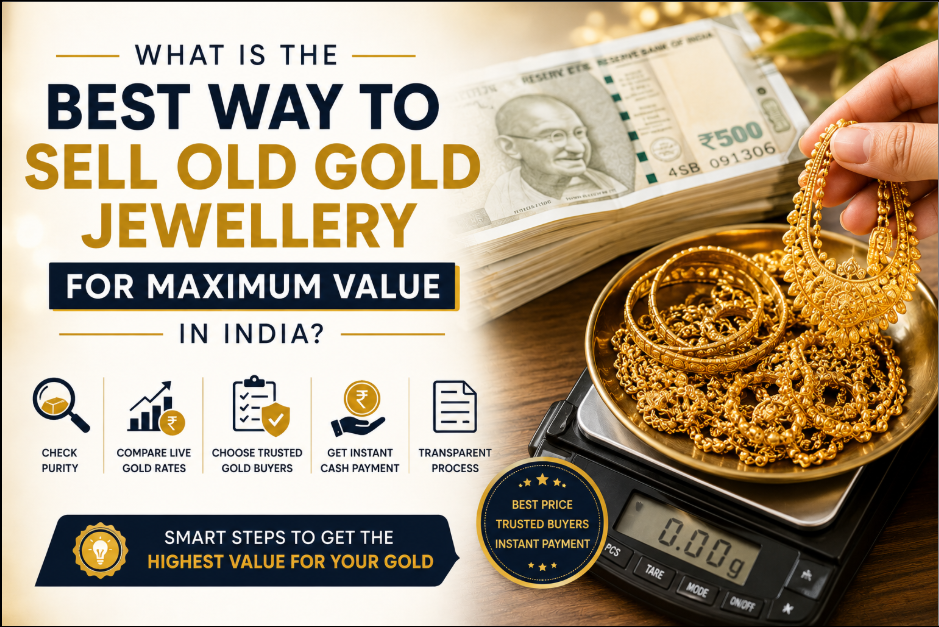
What is the best way to sell old gold jewellery for maximum value in India?

LIjo James
Lijo James – Internal Auditor & Gold Appraiser With over 10 years of experience, Lijo James is a seasoned Internal Auditor and Gold Appraiser specializing in the gold market. His expertise lies in conducting detailed gold market studies, ensuring accurate appraisals, and implementing robust auditing practices. Lijo’s in-depth knowledge of gold trends and market dynamics enables him to deliver reliable insights and maintain high standards of financial accountability. Dedicated to precision and integrity, he consistently ensures compliance with industry regulations while optimizing processes. His commitment to excellence makes him a trusted professional in the gold appraisal and auditing sector.
Read full bio of LIjo JamesIn Indian households, gold is never just a commodity; it is a blend of emotional security, ancestral heritage, and financial insurance. However, when the time comes to liquidate these assets, many consumers face an uphill battle against an opaque, unorganized market.
A common dilemma when looking for a trusted outlet is typing “where can i sell gold for cash near me” into Google, only to end up at a local neighborhood store where valuation methods remain highly subjective. Traditional buyers frequently rely on outdated touchstone methods or insist on melting your jewelry down before giving a quote—a trap that can secretly slash your payout by 10% to 20%.
If you want to know how to get maximum value for old gold jewellery, you must shift from passive seller to informed consumer. This guide reveals the exact framework to protect your wealth and walk away with the absolute highest cash equivalent for your gold.
Step-by-Step Guide to Selling Gold for Maximum Value
Step 1: Track Live Purity Rates
Gold prices fluctuate by the minute. Before checking out gold buyers near me, look up today’s live gold rate as published by the India Bullion and Jewellers Association (IBJA). This serves as the legal baseline for all commercial transactions in India. No buyer should benchmark their offer significantly lower than this standard rate on any given day.
Step 2: Decode Purity & Weight
You will not get paid 24K prices for 22K jewelry. Understanding the math prevents buyers from confusing you with jargon:
- 22 Karat (916 Gold): Contains 91.6% pure gold.
- 18 Karat (750 Gold): Contains 75.0% pure gold.
If a buyer tries to pool your 22K and 18K items together for a single weight measurement, stop them immediately. Each purity category must be weighed and valued separately.
Step 3: Understand the HUID and Hallmarking Advantage
If your jewelry features a Bureau of Indian Standards (BIS) hallmark and a unique 6-digit HUID (Hallmark Unique Identification) code, your job is simple. You can download the official BIS Care App, enter the code, and instantly verify the purity, registration date, and jeweler details.
Important Regulatory Note: While Indian law mandates that jewelers can no longer sell new jewelry without an HUID code, consumers are entirely free to sell or exchange old, unhallmarked legacy gold inherited years ago. Do not let a buyer tell you your unhallmarked gold is worthless or illegal; it simply requires a electronic purity test.
Step 4: Demand Non-Destructive XRF Testing
To find the absolute best gold buyers in Bangalore or any major Indian metro, look closely at their evaluation technology. How much do jewelers deduct when selling old gold? A massive chunk, if they use traditional “acid testing” or “forced melting tricks” that alter the weight of the metal.
Insist on an XRF (X-ray Fluorescence) laser machine test. This technology scans the ornament and gives a precise, computerized breakdown of its exact gold content within seconds—without damaging your jewelry.
Step 5: Shop Around & Avoid Hidden Deductions
Before finalizing a deal, demand an itemized quotation. Legitimate gold buyers will deduct the exact weight of embedded semi-precious stones, pearls, or dust, and charge a minor processing fee (typically 2% to 4%). Walk away from anyone attempting to deduct arbitrary percentages for “making charges” or “wear and tear” on an item they are going to melt down anyway.
Comparing Your Selling Options in India
Choosing where to sell determines your final payout. Here is how the market segments stack up against each other:
| Factor | Specialized Corporate Buyers (e.g., IMG Gold Buyers, MMTC-PAMP) | Traditional Local Jewellers | Pawn Brokers / Local Financiers |
| Purity Testing | Non-destructive XRF Laser Tech | Visual guess / Touchstone / Melting | Acid test / Visual guess |
| Pricing Model | Live IBJA market rates applied directly | Arbitrary store-defined daily rates | Steep discounts to market value |
| Deductions | Minimal (Standard 2-4% melting/service fee) | High (10-15% “Wastage/Making” cuts) | Hidden interest / Massive undervalued cuts |
| Transparency | CCTV-monitored, transparent weighing | Done behind the counter often | Highly opaque |
Crucial Legalities & Documents Required
To ensure your transaction is compliant with Indian anti-money laundering regulations, you cannot simply walk in and exchange gold for large volumes of cash anonymously.
The essential documents required to sell gold for cash in India include:
- Government-Issued Photo ID: Aadhaar Card or Voter ID.
- PAN Card: Mandatory for tracking financial transactions.
- Proof of Address: Driving License, Utility Bill, or Aadhaar.
- Original Purchase Invoice: While not always mandatory for legacy gold, having the original bill prevents disputes regarding ownership and helps lower tax ambiguities.
Compliance Check: For transactions valued above ₹2 Lakh, presenting your PAN card and Aadhaar is a strict legal requirement. Furthermore, reputable buyers will disburse large sums safely via instant bank transfers (IMPS/NEFT) or UPI rather than physical cash bags to stay aligned with RBI guidelines.
A Quick Note on Gold Taxation
Selling jewelry held for more than 24 months attracts Long-Term Capital Gains (LTCG) Tax, which stands at 12.5% without indexation benefits. Profits from gold held for less than 24 months are treated as Short-Term Capital Gains (STCG) and are taxed according to your individual income tax slab rates.
Conclusion
Maximizing the resale value of your gold comes down to eliminating guesswork. By tracking live IBJA rates, verifying your purities via the BIS Care app, and refusing destructive melting tests, you can easily avoid the traditional pitfalls of the jewelry trade.
When you look for reliable services, bypass the unorganized pawnshops. Instead, prioritize established names like IMG Gold Buyers or organized corporate evaluation centers that leverage digital transparency, precise XRF testing, and fair market pricing to give you every rupee your gold is actually worth.
Frequently Asked Questions (FAQs)
-
Can I legally sell old gold inherited from my ancestors without an invoice?
Yes. You can legally sell inherited or legacy gold without an original bill. Reputable corporate buyers will verify your identity via standard KYC documents (PAN and Aadhaar) and may ask you to sign an ownership declaration form to complete the transaction legally.
-
Why do local jewelers deduct 10% to 15% as wastage when buying old gold?
Local jewelers often apply arbitrary “wastage” or “melting loss” deductions to lower their payout and increase their profit margins. True melting loss rarely exceeds 1% to 2%. This is why using automated XRF laser testing at specialized buyback centers is highly recommended.
-
Is it better to exchange old gold for new jewelry or sell it for cash?
Exchanging old gold for new jewelry at the same store can sometimes reduce processing fees, but it locks you into that specific jeweler’s inventory, making charges, and potentially inflated stone weights. Selling your gold for direct bank cash via a transparent buyer gives you total liquidity and the freedom to deploy your funds anywhere.
Written by LIjo James