
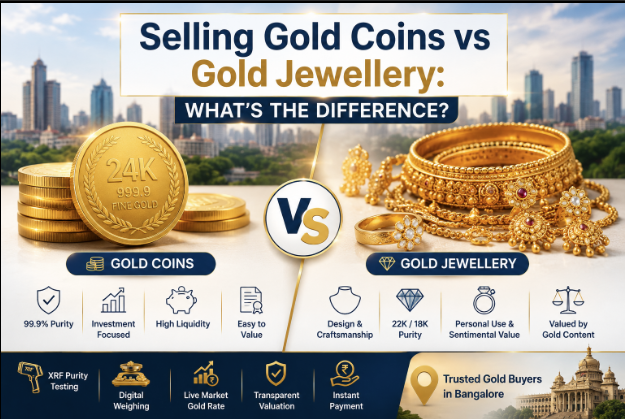
Selling Gold Coins vs Gold Jewellery: What’s the Difference?

LIjo James
Gold has long been one of India’s most trusted assets. Some people buy gold coins as an investment or a way to preserve wealth over time, while others own gold jewellery for weddings, festivals, family traditions, or everyday wear. Eventually, many people consider selling these assets—whether to meet an unexpected financial need, unlock the value of unused gold, rebalance investments, or simply make better use of jewellery that has been sitting in a locker for years.
At first glance, selling a gold coin and selling a gold necklace might seem like exactly the same process. After all, both are made of gold. However, once you understand how buyers evaluate these items, you’ll discover that there are important differences.
Gold coins are usually manufactured for investment purposes and are often available in high purity, such as 24-karat gold. Jewellery, on the other hand, is designed to be worn and commonly comes in 22-karat or 18-karat purity. It may include gemstones, intricate craftsmanship, or custom designs that affect its original purchase price but may not always contribute to its resale value.
This difference often surprises first-time sellers. Someone who paid a premium for beautifully crafted jewellery may expect to receive a similar premium when selling it. Likewise, a person selling investment-grade gold coins may wonder whether the issuing bank or brand influences the resale value. Understanding these factors before visiting a buyer can help you set realistic expectations and compare offers more confidently.
In cities like Bangalore, where gold buying services have become more organised and transparent, many sellers now compare valuation methods instead of accepting the first offer they receive. Modern Gold Buyers in Bangalore often use technologies such as XRF purity testing, calibrated digital weighing systems, and live market gold rates to explain how a valuation is calculated. Knowing what to expect from this process can make it easier to ask informed questions and understand the final offer.
In this guide, we’ll compare selling gold coins vs gold jewellery in detail. You’ll learn how each is valued, what affects resale value, why purity matters, whether hallmarking makes a difference, and what practical steps you can take before selling. Whether you’re planning to sell investment coins, inherited jewellery, broken ornaments, or hallmarked pieces, this article will help you make an informed decision based on facts rather than assumptions.
Gold Coins and Gold Jewellery – Understanding the Basics
Before comparing resale value, it’s helpful to understand why gold coins and gold jewellery are made in the first place. Although both contain gold, they are generally created for different purposes and are purchased with different expectations.
What Are Gold Coins?
Gold coins are primarily considered an investment product. Many people purchase them during festivals such as Akshaya Tritiya or Dhanteras, while others buy them as a long-term store of value or as gifts for special occasions.
Gold coins are commonly available in:
- 24K (99.9% purity)
- Hallmarked bullion coins
- Coins issued by banks
- Coins manufactured by private mints
- Commemorative or collectible coins
Most investment-grade gold coins focus on the value of the gold itself rather than decorative design.
Why People Buy Gold Coins
People often choose gold coins because they:
- Are easy to store.
- Can be purchased in different weights.
- Are commonly viewed as an investment.
- May be suitable for gifting.
- Usually contain high-purity gold.
What Is Gold Jewellery?
Gold jewellery serves a different purpose. While it also represents financial value, it is primarily created for personal use, cultural traditions, celebrations, and fashion.
Examples include:
- Chains
- Bangles
- Rings
- Earrings
- Necklaces
- Bracelets
- Pendants
Unlike investment coins, jewellery often includes craftsmanship, intricate designs, gemstones, or enamel work.
The most common purity levels include:
- 22K
- 18K
- 14K
Some designer pieces also include diamonds or coloured stones that influence the purchase price but are assessed separately during resale.
Investment Gold vs Wearable Gold
One of the easiest ways to understand the difference is to think about purpose.
| Feature | Gold Coins | Gold Jewellery |
| Primary Purpose | Investment and savings | Personal use and adornment |
| Common Purity | 24K | 22K, 18K, 14K |
| Design Importance | Minimal | Significant |
| Includes Making Charges | Usually minimal | Commonly included in purchase price |
| Emotional Value | Usually lower | Often high due to family or sentimental significance |
| Typical Buyers | Investors, gift buyers | Families, individuals, wedding purchases |
This distinction becomes important during resale because the valuation process focuses primarily on the gold content rather than the original retail price.
Banks vs Private Mints
Many people ask whether bank-issued gold coins are worth more than coins produced by private refiners.
In most resale situations, buyers generally evaluate the purity, weight, hallmark status, and current market gold rate, regardless of where the coin was originally purchased. Some collectible or rare coins may have additional numismatic value, but standard bullion coins are typically valued based on their gold content.
Hallmarked vs Non-Hallmarked Gold
Both gold coins and jewellery may be hallmarked or non-hallmarked.
A hallmark provides information about the stated purity of the item, but professional buyers often verify purity using modern testing methods rather than relying solely on markings.
This means that:
- Hallmarked jewellery can be evaluated.
- Non-hallmarked jewellery can also be evaluated.
- Gold coins are commonly checked for purity before valuation.
- Modern testing helps improve transparency.
Key Takeaways
- Gold coins are generally purchased as an investment, while jewellery is created primarily for personal use.
- Coins commonly have higher purity levels, whereas jewellery is often made in 22K or 18K for durability.
- The original purchase price of jewellery may include making charges and design costs that are separate from the value of the gold itself.
- Both hallmarked and non-hallmarked items can typically be assessed using professional purity testing methods.
How Gold Coins Are Valued
Many first-time sellers assume that the value of a gold coin depends mainly on where it was purchased. In reality, professional valuation focuses on the characteristics of the gold itself.
Q. How are gold coins valued?
Gold coins are generally valued based on their purity, weight, hallmark status, and the current market gold rate. Professional buyers may also use XRF purity testing and calibrated digital weighing to verify the coin’s gold content before providing a valuation.
Step 1: Purity Assessment
Purity is one of the most important factors in determining the value of a gold coin.
Investment coins are commonly produced in:
| Purity | Gold Content |
| 24K | 99.90% |
| 22K | 91.60% |
Higher purity generally means a greater proportion of pure gold, assuming the weight is the same.
Step 2: Weight Measurement
After verifying purity, the coin is weighed using a calibrated digital weighing machine.
The recorded weight plays a key role in calculating its value alongside the prevailing gold rate.
Step 3: Live Market Gold Rate
Gold prices fluctuate throughout the trading day due to factors such as international markets, currency movements, and supply and demand.
Many professional buyers base their valuation on the prevailing market rate at the time of the transaction, making it useful for sellers to check the live rate before visiting.
Step 4: Hallmark Verification
If a coin carries a recognised hallmark, it provides information about its stated purity.
Even so, many buyers verify purity independently as part of the valuation process to ensure accuracy and transparency.
Step 5: XRF Purity Testing
Modern gold buyers increasingly use X-ray Fluorescence (XRF) technology to assess purity.
Benefits include:
- Non-destructive testing
- No scratching or cutting of the coin
- Fast analysis
- Detailed composition report
- Greater transparency for the seller
This technology helps buyers and sellers understand the composition of the gold without damaging the item.
Step 6: Bullion Value
Standard investment-grade gold coins are generally valued for their bullion content—that is, the amount of gold they contain—rather than for decorative features.
However, rare or collectible coins may have additional value to collectors, which is separate from their bullion value.
Key Takeaways
- Gold coin valuation is primarily based on purity, weight, hallmark verification, and the prevailing market gold rate.
- XRF purity testing and digital weighing improve transparency during the valuation process.
- Standard bullion coins are usually assessed for their gold content, while collectible coins may have additional value beyond the metal itself.
- Understanding these factors helps sellers compare offers with greater confidence.
Gold Coins vs Gold Jewellery – Side-by-Side Comparison
Although both contain gold, gold coins and jewellery differ in purpose, construction, and how buyers assess them. The following comparison highlights objective differences that can help sellers understand what to expect during valuation.
| Factor | Gold Coins | Gold Jewellery |
| Primary Purpose | Investment and savings | Personal use and adornment |
| Typical Purity | Usually 24K | Commonly 22K or 18K |
| Hallmark | Often hallmarked | May be hallmarked or non-hallmarked |
| Making Charges | Generally lower | Usually included in purchase price |
| Valuation Basis | Purity, weight, live gold rate | Purity, weight, live gold rate, stone assessment (if applicable) |
| Design Influence | Minimal | High at purchase, limited during resale |
| Emotional Value | Usually lower | Often higher due to family or personal significance |
| Typical Buyers | Investors and gift purchasers | Families and jewellery owners |
| Documentation | Identity verification | Identity verification |
| Liquidity | Generally easy to evaluate | Easy to evaluate after purity assessment |
Gold Coins vs Gold Jewellery: Pros and Considerations
| Gold Coins | Gold Jewellery |
| Often have high purity | Available in various purity levels |
| Primarily investment-focused | Suitable for daily wear and special occasions |
| Usually simpler valuation | May require additional assessment if gemstones are present |
| Minimal design considerations | Purchase price often includes craftsmanship and making charges |
| Convenient for long-term storage | May carry sentimental or family value |
Neither option is inherently “better.” The appropriate choice depends on why the gold was purchased, its intended use, and the seller’s financial goals.
Key Takeaways
- Coins and jewellery are valued using similar core principles but may differ in the details of the assessment.
- Jewellery often includes design elements that affect its purchase price more than its resale value.
- Coins are typically evaluated for their bullion content and purity.
- Understanding these differences helps sellers compare valuations more effectively.
Which Usually Has Better Resale Value?
This is one of the most common questions people ask before selling gold.
The short answer is:
There is no universal answer. Every item is valued individually based on its characteristics.
Q. Which has better resale value: gold coins or gold jewellery?
Neither gold coins nor gold jewellery automatically has a higher resale value. Valuation generally depends on factors such as purity, weight, current market gold rates, and the characteristics of the individual item. Each piece is assessed separately.
1. Purity Matters
Gold coins are often manufactured in 24K purity, while jewellery is commonly made from 22K or 18K gold to improve durability.
If two items weigh the same, a higher-purity item generally contains more gold.
2. Gold Content Is Important
Professional valuation focuses on the actual gold contained in the item.
For example:
- A lightweight 24K coin may contain less total gold than a heavier 22K necklace.
- A heavier jewellery item may contain more gold overall despite its lower purity.
This is why both purity and weight are considered together.
3. Making Charges
When purchasing jewellery, customers often pay for:
- Craftsmanship
- Design
- Labour
- Branding
These costs are part of the retail price but are generally separate from the intrinsic value of the gold during resale.
4. Wear and Tear
Daily-use jewellery may show signs of wear over time.
While cosmetic condition can influence jewellery’s retail appeal, professional buyers primarily evaluate the recoverable gold content.
5. Current Market Gold Rate
Gold prices change regularly.
Two identical items sold on different days may receive different valuations because the prevailing market rate has changed.
6. Every Item Is Unique
No two pieces of jewellery—or even two gold coins—are necessarily identical.
Professional buyers assess each item individually based on:
- Purity
- Weight
- Hallmark status
- Testing results
- Current gold rate
This approach provides a more accurate valuation than relying on assumptions or comparing only the original purchase price.
Key Takeaways
- There is no fixed rule that gold coins always have a better resale value than jewellery.
- Purity, weight, and prevailing market rates all influence valuation.
- Making charges and craftsmanship generally affect the purchase price more than the resale value.
- Each item should be assessed individually using transparent valuation methods.
Factors That Affect Gold Valuation
| Factor | Why It Matters |
| Live Gold Rate | Determines the day’s base value |
| Purity | Shows actual gold content |
| Weight | Calculates total gold quantity |
| Hallmark | Helps identify stated purity |
| XRF Testing | Verifies purity accurately |
| Documentation | Supports legal compliance |
| Transparency | Builds confidence in the valuation |
Key Takeaways
- Gold valuation depends on multiple factors, not just the item’s appearance.
- Purity, weight, and the prevailing market rate are among the most significant considerations.
- Modern testing methods such as XRF can improve transparency.
- Understanding the valuation process makes it easier to compare offers objectively.
Common Mistakes Sellers Make
Many first-time sellers focus only on the final amount offered. In reality, understanding how that amount was calculated is just as important.
Avoiding a few common mistakes can lead to a more informed selling experience.
1. Assuming the Purchase Price Equals the Resale Value
People often expect to receive the same amount they originally paid.
However, the purchase price may have included:
- Making charges
- Design costs
- Taxes
- Branding
Resale valuation usually focuses on the recoverable gold content rather than the original retail price.
2. Ignoring Purity Testing
Some sellers accept an offer without understanding how purity was determined.
Instead, ask:
- How was purity tested?
- Was XRF testing used?
- Can I see the results?
Understanding the testing method improves transparency.
3. Not Checking Today’s Gold Rate
Gold prices change frequently.
Reviewing the current market rate before visiting a buyer provides useful context when evaluating an offer.
4. Accepting the First Offer Without Understanding the Process
Choosing the first buyer without asking questions may limit your understanding of how the valuation was calculated.
Consider asking:
- Which gold rate is being used?
- How is purity measured?
- How is the final amount calculated?
- Are deductions explained clearly?
5. Confusing Jewellery Value with Gold Value
Designer jewellery may have:
- Unique craftsmanship
- Premium branding
- Custom design
These features often influence the purchase price but may not directly affect the value of the gold itself during resale.
6. Forgetting About Attached Stones
Jewellery with diamonds or gemstones may be assessed differently from plain gold items.
Before accepting an offer, ask how stones are being considered in the valuation.
Key Takeaways
- A little preparation can make the selling process smoother.
- Understanding the valuation method is often more valuable than focusing only on the final number.
- Asking questions helps you make informed decisions.
Selling Gold Coins May Be Suitable If:
- You’re selling investment-grade bullion.
- You no longer need the coins as part of your investment strategy.
- You want to understand the bullion-based valuation.
Selling Gold Jewellery May Be Suitable If:
- The jewellery is no longer worn.
- You have broken or outdated pieces.
- You’re looking to unlock the value of unused gold.
- You have inherited jewellery that no longer fits your needs.
Ultimately, the right choice depends on your financial goals, personal circumstances, and whether the item has sentimental value.
Key Takeaways
- Preparing before visiting a buyer can make the process smoother and more transparent.
- Ask questions about purity testing, weight, and valuation rather than focusing only on the final offer.
- Compare the overall valuation process, not just the quoted amount.
Conclusion
Whether you plan to sell gold coins or gold jewellery, understanding how each is valued is one of the best ways to make an informed decision. Although both contain gold, they often serve different purposes. Gold coins are typically purchased as investment assets, while jewellery is designed for personal use, celebrations, and family traditions.
During resale, however, both are generally evaluated using similar principles. Professional buyers typically consider the purity, weight, hallmark status, and prevailing market gold rate before calculating a valuation. Jewellery may also require additional assessment if it contains gemstones or decorative elements.
Instead of assuming that one type of gold will always provide a better resale value, focus on understanding the valuation process. Ask questions about purity testing, compare transparent valuation methods, review the current gold rate, and ensure you have the required documentation before selling.
If you’re planning to sell gold coins or gold jewellery in Bangalore, take time to compare professional valuation processes rather than accepting the first offer you receive. A transparent approach—including accurate purity testing, calibrated digital weighing, and clear explanations—can help you make a confident decision.
To learn more about the gold selling process, valuation methods, and what to expect before selling, explore our Gold Buyers in Bangalore guide and related educational resources.
Frequently Asked Questions
1. Are gold coins easier to sell than gold jewellery?
Both gold coins and gold jewellery can generally be sold through professional gold buyers. The process is often similar, with buyers assessing purity, weight, and the prevailing market gold rate. The ease of selling depends more on the buyer’s valuation process and documentation requirements than on the type of gold.
2. Which usually has a better resale value?
There is no universal answer. Gold coins and jewellery are valued individually based on factors such as purity, weight, hallmark status, and current market prices. A higher-purity coin may contain more gold, while a heavier piece of jewellery may have greater total gold content. Each item should be assessed separately.
3. Can I sell bank-issued gold coins?
Yes. Bank-issued gold coins can generally be sold to professional gold buyers. During the valuation process, buyers typically assess the coin’s purity, weight, and current market gold rate rather than relying solely on the issuing institution.