
-
By LIjo James
-
November 4, 2024
- 0 Comment
How to Track Gold Price Trends Before Selling Your Gold

LIjo James
Lijo James – Internal Auditor & Gold Appraiser With over 10 years of experience, Lijo James is a seasoned Internal Auditor and Gold Appraiser specializing in the gold market. His expertise lies in conducting detailed gold market studies, ensuring accurate appraisals, and implementing robust auditing practices. Lijo’s in-depth knowledge of gold trends and market dynamics enables him to deliver reliable insights and maintain high standards of financial accountability. Dedicated to precision and integrity, he consistently ensures compliance with industry regulations while optimizing processes. His commitment to excellence makes him a trusted professional in the gold appraisal and auditing sector.
Read full bio of LIjo JamesSelling gold isn’t something most of us do regularly — so it’s natural to feel uncertain about the process. You want to get the highest value possible, but questions start running through your mind: “Is today the right day to sell?”, “What if the price increases tomorrow?”, “How do I make sure I’m not being underpaid?”
Many people check the gold rate on their phone every morning, hoping for clarity. You see the numbers going up and down, but it’s not always easy to understand what those changes really mean — or how they should influence your selling decision. That confusion is completely normal. Gold prices shift because of several factors like global markets, currency changes, demand, and overall economic conditions. Without the right information, it’s easy to feel lost or second-guess yourself.
This guide is here to make things simple. By breaking down gold price trends in a clear and practical way, it helps you track rates confidently, understand what affects them, and choose the best moment to sell your gold with certainty.
Why Tracking Gold Price Trends Matters
Most people want to sell gold only when they’re confident they’re getting a fair offer. But without understanding price trends, it’s easy to sell too early, wait too long, or accept a lower rate.
Your resale value depends on three things:
- Purity of your gold – It determines how much actual gold is present in your jewellery, so higher-karat gold always gives a better resale value. Knowing the purity helps you compare buyer offers more accurately.
- Weight – Gold is priced per gram, so even small weight differences can change the amount you receive. Accurate weighing ensures you get paid for every gram you own.
- Current market rate – Gold prices change daily based on global and local market factors, so the rate on the day of selling directly affects your payout. Checking the live rate helps you avoid selling during a dip.
When you understand how the market moves, you make informed decisions instead of relying on guesswork.
Common concerns sellers face
- Fear of being underpaid because different buyers may quote different amounts.
- Confusion about daily rate changes and not knowing why prices go up or down.
- Not knowing if today’s rate is “good enough,” which makes the timing feel uncertain.
- Comparing multiple offers but not knowing which buyer is genuinely fair and transparent.
- Expecting making charges to count toward resale value, even though resale is based only on purity and weight.
Understanding trends turns all this uncertainty into clarity.
How to Track Gold Price Trends Before Selling
Tracking gold price trends helps you understand whether the market is moving up or down so you can choose the best time to sell. Start by checking the daily gold rate from reliable sources and compare the prices for at least a week to spot patterns. Pay attention to factors like global economy, currency changes, and inflation, because these directly influence gold prices. Use a gold calculator to estimate your gold’s value so you know what to expect before visiting a buyer. By watching short-term movements and understanding what drives price changes, you can sell your gold with more confidence and better timing.
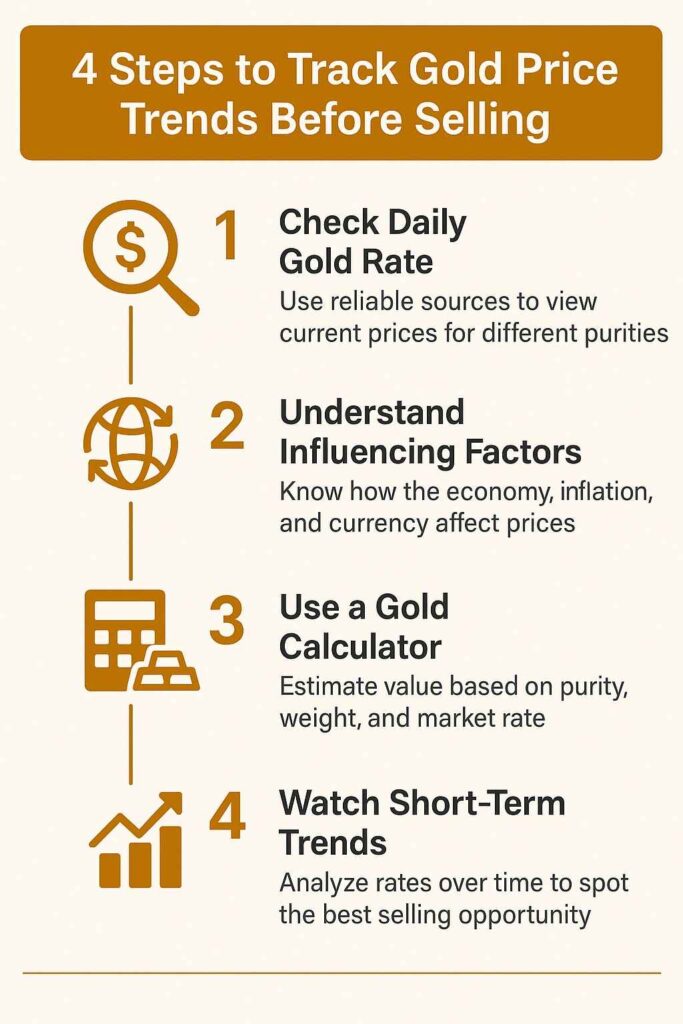
1. Check Reliable Daily Gold Rate Sources
Gold prices are influenced by both global and local markets, which means the rate can change every day. Sometimes, it even changes multiple times in a single day.
What to look for:
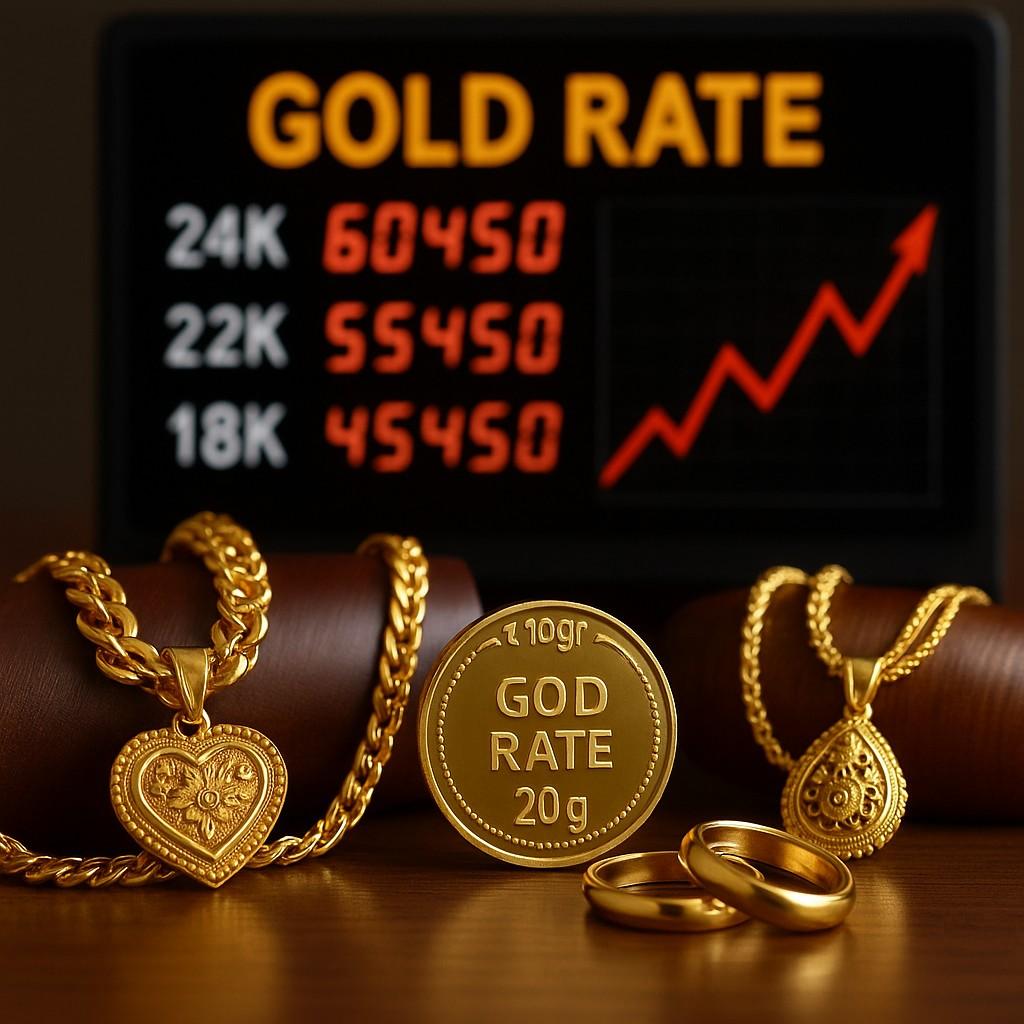
- Rates for 24K, 22K, and 18K so you can compare purity-based pricing accurately.
- Daily and weekly trend movement to understand how the price is shifting over time.
- Charts or graphs that help you spot upward or downward patterns at a glance.
Useful habit:
Track the price for at least 7–10 days. This helps you see short-term patterns instead of reacting to sudden jumps.
2. Understand What Influences Gold Prices
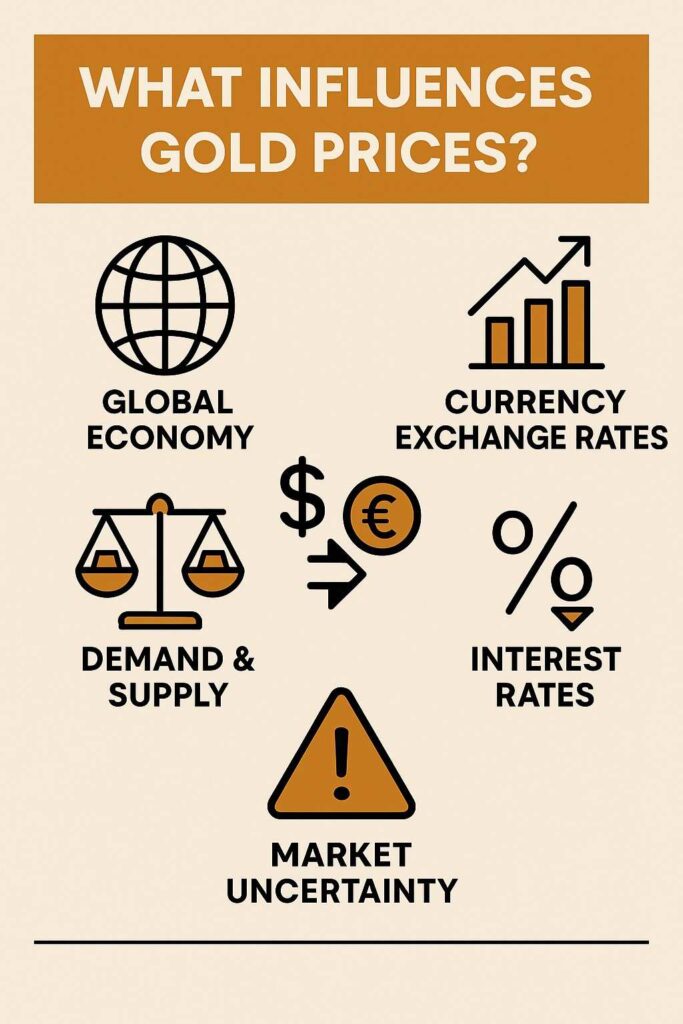
Gold prices aren’t random — they are affected by a combination of global and economic factors. Knowing these makes it easier to understand why the rate rises one day and drops the next.
Major factors include:
- Global economic stability: When uncertainty increases, gold demand often rises, leading to higher prices.
- Currency fluctuations: A weaker local currency can push gold prices up because importing gold becomes costlier.
- Inflation: Higher inflation often increases gold prices as people see gold as a safe investment.
- Demand and supply: Festivals, market demand, and financial trends all affect how much gold is bought or sold.
- Interest rates: When interest rates rise, gold prices may fall, and when interest rates drop, gold prices often rise.
The more you understand these influences, the easier it becomes to predict when prices are likely to increase.
3. Use a Gold Price Calculator to Estimate Value
Before you visit any buyer, use a gold calculator to estimate the possible price of your gold. It helps you understand the melt value — the actual value of the metal content.
You will need:
- Exact weight – The total weight of your gold item, which directly affects your payout.
- Purity level (Karat) – The karat value helps determine how much pure gold your jewellery contains.
- Current gold rate – The live market rate used to estimate the value of your gold before selling.
Why this helps
- You enter a store with realistic expectations, knowing the approximate value of your gold.
- You are less likely to be misled because you already understand the estimated price range.
- You can compare different offers more effectively, helping you choose the fairest buyer.
A calculator won’t give an exact final quote, but it prepares you for a fair range.
4. Time Your Sale Using Price Movement Patterns
Tracking gold prices helps you identify when it might be profitable to sell.
Good times to consider selling:
- When prices have been rising steadily for a few days, indicating an upward trend.
- When global uncertainty increases, as gold often becomes a safe haven and prices rise.
- During times of high demand, such as festivals or peak buying seasons.
Times to avoid if possible:
- Sudden dips in the market, which may lead to lower resale value.
- Extremely volatile periods when prices fluctuate too quickly to predict.
- When prices are falling consistently, indicating a downward trend.
If you’re not in a hurry, a bit of patience can lead to a noticeably better payout.
How to Protect Yourself When Selling Gold
Even with good timing, you need a transparent selling experience.
Before selling, make sure to:
- Verify purity in front of you using an XRF machine to ensure accurate, transparent testing.
- Ask for a detailed quote breakdown showing purity, weight, rate per gram, and final amount.
- Check for hidden charges or melting losses that can reduce your final payout.
- Get multiple quotes from different buyers to compare fairness and transparency.
- Avoid buyers who melt jewellery before quoting, as this can lead to irreversible loss and inaccurate pricing.
These steps help ensure you get the full value your gold deserves.
Conclusion
Selling gold doesn’t have to feel confusing or stressful. When you take time to track price trends, understand how the market behaves, and prepare yourself with the right information, the entire process becomes much simpler. By knowing what affects gold rates and how buyers evaluate your jewellery, you gain the clarity needed to make smart decisions.
With this knowledge, you can choose the ideal moment to sell instead of rushing during a price dip. You also protect yourself from underpayment, since you’ll know how to evaluate offers and identify genuine, transparent buyers. Ultimately, being well-informed helps you walk away feeling confident, satisfied, and assured that you received the best possible value for your gold.
FAQs
Is it better to wait for gold prices to rise, or should I sell as soon as I need money?
This is one of the most common questions on Reddit and Quora. If you’re not in a hurry, tracking gold prices for a few days or weeks can help you catch a better rate. But if you need money urgently, it’s better to sell at the current fair market rate instead of waiting too long — because prices can drop unexpectedly.
Why do different gold buyers offer different prices even when the daily rate is the same?
Google search users often ask this. Buyers follow the same market rate, but they have different margins, testing methods, and policies. Some deduct melting charges, some charge service fees, and some offer rates slightly below market. That’s why comparing two or three buyers is one of the best ways to avoid underpayment.
How do I know if the gold rate I’m seeing online is accurate?
People ask this frequently on Quora and Google. The safest way is to check 2–3 trusted websites or apps and look for similar prices. Small variations are normal, but large differences usually mean the source is outdated or unreliable. Reputable platforms update rates daily — sometimes even multiple times a day.
Do gold buyers pay the exact market rate shown online?
Not always. Online rates show the market price, but most buyers pay slightly below it because they include testing costs, margin, or refining charges. A transparent buyer will explain the difference clearly and show how they calculate your final price.
Why does the gold rate drop right when I plan to sell?
This is a common frustration on Reddit and Google. Gold rates often react to global news, currency shifts, or interest rate announcements. It’s not personal — the market is naturally volatile. Checking trends for a week or two helps you understand whether the drop is temporary or part of a longer decline.
How much does purity affect the selling price of gold?
Purity affects your payout more than anything else. Even a small difference between 22K and 20K can impact the final price. This is why most sellers online (Reddit/Quora) insist on XRF testing in front of you, so you know exactly what purity is being measured.
Written by LIjo James