
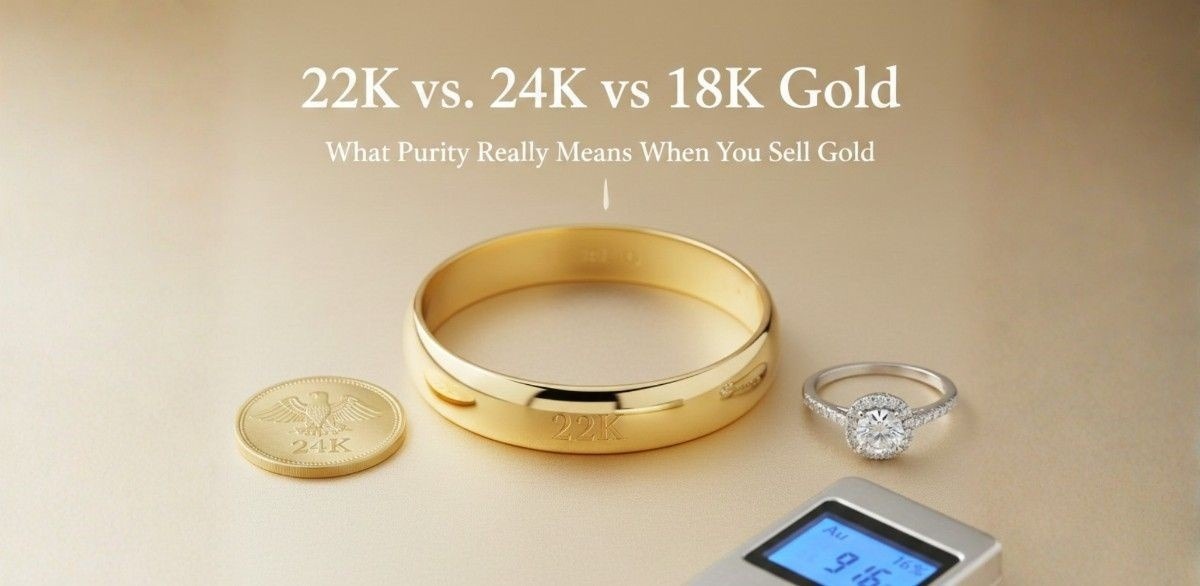
-
By LIjo James
-
December 26, 2025
- 1 Comment
Karats Explained: 22K vs 24K vs 18K Gold

LIjo James
Lijo James – Internal Auditor & Gold Appraiser With over 10 years of experience, Lijo James is a seasoned Internal Auditor and Gold Appraiser specializing in the gold market. His expertise lies in conducting detailed gold market studies, ensuring accurate appraisals, and implementing robust auditing practices. Lijo’s in-depth knowledge of gold trends and market dynamics enables him to deliver reliable insights and maintain high standards of financial accountability. Dedicated to precision and integrity, he consistently ensures compliance with industry regulations while optimizing processes. His commitment to excellence makes him a trusted professional in the gold appraisal and auditing sector.
Read full bio of LIjo JamesA Simple Guide for Anyone Selling Gold for Cash
If you have ever taken old gold jewellery out of your locker and wondered whether it is 18K or 22K, you are not alone. Many people sell gold without clearly knowing its karat. Bills get misplaced. Hallmark stamps fade. Family jewellery comes with stories, not specifications.
When you sell gold for cash, karat matters. It decides how much pure gold your jewellery actually contains. That directly affects the value you receive. This guide explains gold karats in a simple way and connects it to what really happens when you sell your gold.
What Does “Karat” Mean in Gold?
Karat is a unit used to measure the purity of gold.
Pure gold is measured on a scale of 24 parts.
Here is how it works:
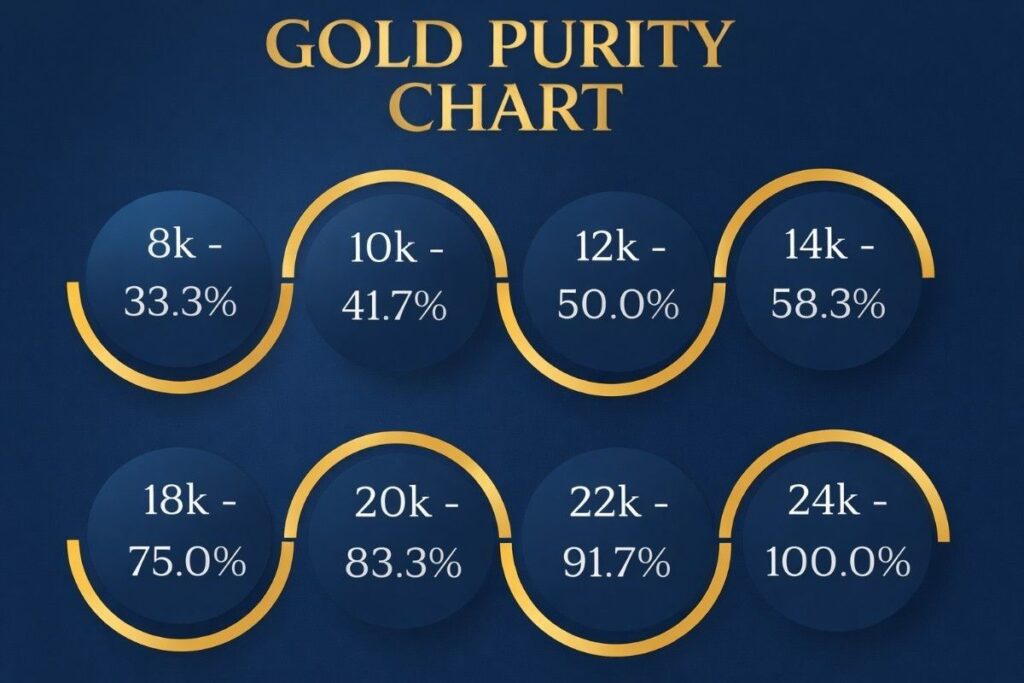
- 24K Gold means 24 out of 24 parts are pure gold.
- 22K Gold means 22 parts gold and 2 parts alloy metals.
- 18K Gold means 18 parts gold and 6 parts alloy metals.
- 14K Gold means 14 parts gold and 10 parts alloy metals.
- 10K Gold means 10 parts gold and 14 parts alloy metals.
One important clarification.
Karat (K) refers to gold purity.
Carat (ct) refers to gemstone weight. They are not the same.
24K Gold. Purest Form. Usually Not Daily Wear Jewellery
Purity: About 99.9 percent pure gold.
Colour: Deep, bright yellow.
Strength: Very soft and bends easily.
24K gold is rarely used for daily jewellery because it scratches and deforms easily. You will mostly see it in:
- Gold coins
- Gold bars
- Investment-grade gold
When selling 24K gold, most of the value comes directly from its purity and weight. There is very little confusion here, as coins and bars are usually clearly marked.
18K Gold. Stronger for Daily Wear and Stone Jewellery
Purity: 75 percent pure gold.
Colour: Slightly muted yellow.
Strength: More durable due to higher alloy content.
18K gold is commonly used for:
- Diamond jewellery
- Gemstone-studded rings
- Modern daily wear designs
When selling 18K gold, the jewellery may look heavier or more premium, but it contains less pure gold than 22K jewellery of the same weight. This difference often surprises first-time sellers.
14K Gold. Practical, Durable, and Common in Modern Designs
Purity: About 58.3 percent pure gold.
Strength: High durability.
Colour: Lighter yellow tone.
14K gold is often found in:
- Lightweight chains
- Imported jewellery
- Contemporary designs
While 14K jewellery is strong and wearable, the resale value depends strictly on its gold content. The appearance does not increase the gold value.
10K Gold. Lowest Gold Content You May Still See in Jewellery
Purity: About 41.7 percent pure gold.
Strength: Very durable.
Colour: Pale yellow.
10K gold is less common in India but may appear in some imported or budget jewellery. When selling, expectations should be realistic. The gold content is much lower compared to higher karats.
Which Karat Is Most Common in Jewellery. And Why?
Pure gold is rarely used for wearable jewellery because it is too soft. Alloy metals are added to improve strength and shape retention.
In simple terms:
- Bridal and traditional jewellery is usually 22K.
- Diamond and gemstone jewellery is usually 18K.
- Imported or daily wear pieces are often 14K or 10K.
One important reminder.
Colour alone is not proof of purity. Only proper testing confirms karat.
Why Karat Matters When You Sell Gold for Cash
Karat determines how much pure gold is present in your jewellery.
Higher karat usually means higher pure gold content per gram.
However, your final payout depends on more than just karat:
- Tested purity
- Net gold weight after removing stones or non-gold parts
- Live gold rate on the selling day
If you are comparing offers from Gold Buyers in Hyderabad, knowing your karat helps you understand why two quotes can differ even for jewellery that looks similar.
How Gold Buyers Check Karat. What a Transparent Process Looks Like
A professional gold evaluation follows clear steps:
- Jewellery is weighed accurately.
- Purity is tested using non-destructive methods such as XRF testing.
- The live gold rate is applied based on tested purity.
- The calculation is explained clearly.
- Payment is made instantly.
A transparent buyer always shows the test result and explains how the final amount is calculated.
You can read more about the purity testing process here:
22K vs 24K vs 18K vs 14K vs 10K. Quick Comparison
| Karat | Purity | Durability | Common Use | Impact When Selling |
|---|---|---|---|---|
| 24K | 99.9% | Very soft | Coins, bars | Highest value per gram |
| 22K | 91.6% | Moderate | Traditional jewellery | High resale value |
| 18K | 75% | Strong | Diamond jewellery | Lower than 22K for same weight |
| 14K | 58.3% | Very strong | Daily wear | Moderate value |
| 10K | 41.7% | Extremely strong | Budget jewellery | Lowest gold value |
Common Myths About Karats That Cost Sellers Money
- Bright yellow jewellery is always 22K or 24K.
- Hallmark stamps guarantee exact purity in every part.
- Heavier jewellery always means more value. Stones and alloys matter.
- The first quote offered is always the best one.
Quick Checklist Before You Visit a Gold Buyer
- Carry valid ID for KYC verification.
- Separate stone-studded jewellery if possible.
- Check for any visible hallmark or karat stamp.
- Look up the live gold rate on the same day.
- Choose a buyer who tests purity in front of you and explains the result.
This checklist is especially helpful if you are visiting Gold Buyers in Hyderabad during busy selling periods.
FAQs
Is 24K always better than 22K when selling gold?
24K has higher purity, but most jewellery is 22K. Value depends on purity and weight.
Can 18K gold give a good resale value?
Yes. It has value, but the gold content is lower than 22K for the same weight.
How do I know if my gold is 18K or 22K?
Only a purity test can confirm this accurately.
Does hallmark guarantee purity?
Hallmark indicates standardisation, but testing is still required.
Are stones included in gold weight?
No. Stones and non-gold parts are excluded during valuation.
Conclusion. Know Your Karat. Sell With Clarity
Understanding gold karats helps you set the right expectations when selling gold. Karat affects purity. Purity affects value. Testing confirms the truth.
You do not need to guess. A transparent purity check makes everything clear.
Visit IMG Gold Buyer near you for a free purity check
Know your gold’s exact karat and value before you decide to sell.
Learn more about instant payment options here:
Find a nearby branch here:
Written by LIjo James