
-
By LIjo James
-
September 26, 2025
- 0 Comment
Best Ways to Sell Old Gold Jewellery for Maximum Value

LIjo James
Lijo James – Internal Auditor & Gold Appraiser With over 10 years of experience, Lijo James is a seasoned Internal Auditor and Gold Appraiser specializing in the gold market. His expertise lies in conducting detailed gold market studies, ensuring accurate appraisals, and implementing robust auditing practices. Lijo’s in-depth knowledge of gold trends and market dynamics enables him to deliver reliable insights and maintain high standards of financial accountability. Dedicated to precision and integrity, he consistently ensures compliance with industry regulations while optimizing processes. His commitment to excellence makes him a trusted professional in the gold appraisal and auditing sector.
Read full bio of LIjo JamesA practical guide to turning unused gold into cash—safely, fairly, and stress-free.
Do you have a box of old gold jewellery lying around—perhaps broken bangles, outdated chains, or earrings you never wear? For many families, this jewellery sits unused for years. But when financial needs arise—be it for education, medical bills, or even a family trip—selling that old gold becomes a smart way to unlock value.
Still, there’s hesitation. People often ask:
- “What if I get cheated?”
- “How do I know the real value of my jewellery?”
- “Will I get instant cash, or will the process be complicated?”
This guide will walk you through the best ways to sell old gold jewellery for maximum value, covering everything from gold valuation, choosing the right buyer, avoiding mistakes, and preparing yourself with confidence.
Why People Sell Old Gold Jewellery
Gold isn’t just an ornament—it’s also an investment. Here’s why many decide to sell:
- Financial flexibility – Quick access to cash during emergencies or planned expenses.
- Decluttering – Old, unused designs no longer serving a purpose.
- No sentimental value – Jewellery without emotional attachment can be monetized.
- Reinvestment – Using proceeds for better opportunities—stocks, travel, or even upgrading to new jewellery.
💡 Think of selling gold as recycling value from something unused into something useful.
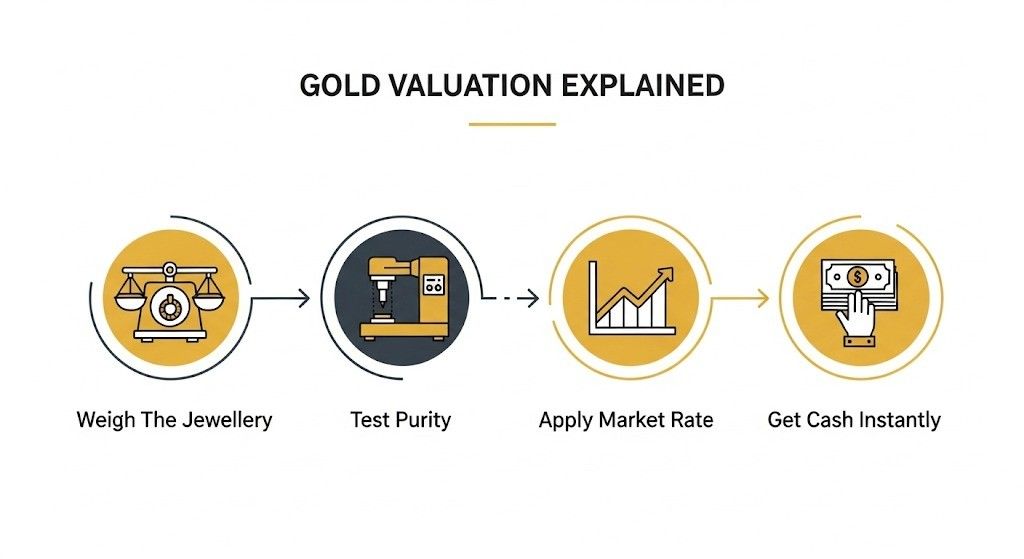
How Gold Value is Determined
Understanding how your gold is valued ensures you won’t feel shortchanged. Buyers evaluate jewellery based on these factors:
- Purity (Karat Value) – Measured in 24K, 22K, 18K, etc. The higher the karat, the more valuable the piece.
- Weight – Calculated in grams. Even small amounts matter.
- Current Market Price (Spot Rate) – Gold prices fluctuate daily; always check the rate before selling.
- Deductions – Buyers may exclude charges for non-gold elements like stones, making charges, or impurities.
- Hallmarks – Hallmarked jewellery typically gets better offers, as purity is certified.
👉 Always request a live demonstration of weighing and purity testing in front of you. Transparent buyers never hide the process.
Step-by-Step Process to Sell Old Gold Jewellery
Selling gold doesn’t need to be stressful. Follow this roadmap:
- Collect all your items – Include broken or damaged pieces; weight matters more than design.
- Clean carefully – A gentle wipe is fine, but avoid polishing or altering.
- Check the day’s gold rate – Reliable sources include RBI or bullion association sites.
- Research reputable buyers – Shortlist licensed gold buyers with strong reviews.
- Get multiple appraisals – Never settle for the first offer.
- Ask questions about deductions – Understand what will be subtracted from your payout.
- Negotiate and finalize – Choose the best offer, insist on a receipt, and confirm payment method (cash, bank transfer, or cheque).
How to Choose the Right Gold Buyer?
Trust is everything when selling gold. Look for these signs:
- Transparent valuation – Testing and weighing done openly.
- Strong reputation – Verified Google reviews, testimonials, and word of mouth.
- Licensed business – Always ask for certification.
- Secure transactions – Payment methods should be fast and legitimate.
- Convenience – Some buyers offer doorstep evaluation or instant cash payout.
🚩 Red flag: If a buyer avoids giving receipts or pushes you to decide quickly, walk away.
Tips to Maximise Value When Selling
Want the highest return? Keep these in mind:
- Sell when prices peak – Watch trends; global gold price movements affect your payout.
- Bring invoices or certificates – Proof of purchase or hallmarking increases buyer confidence.
- Bundle multiple items – Selling several pieces together can improve your negotiating power.
- Skip unnecessary polishing – Refinishing may reduce gold weight.
- Ask about every deduction – Clarity avoids unpleasant surprises.
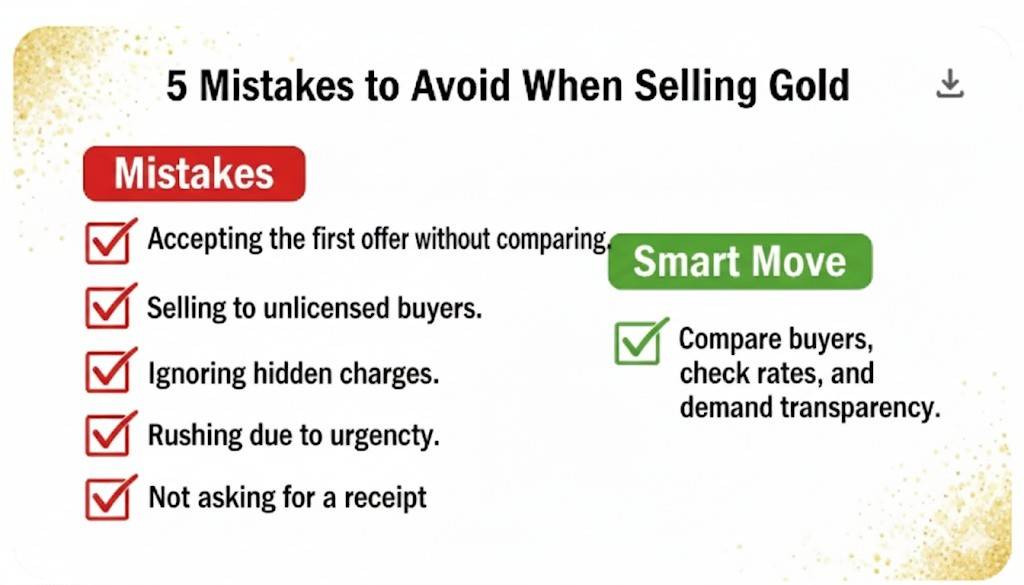
Mistakes Sellers Commonly Make
Avoid these costly errors:
- Accepting the first offer blindly.
- Selling in desperation without comparing buyers.
- Ignoring hidden charges like wastage deductions.
- Choosing buyers without certification or credibility.
- Forgetting to take a receipt, which may cause issues later.
Local Considerations Across India
Gold buying practices differ slightly by region.
- Kerala – High demand but also lots of competition; ensure your buyer is licensed.
- Bangalore – More modernized markets with transparent buyers.
- Hyderabad – Traditional jewellery designs may carry sentimental weight; confirm how they’re evaluated.
Always choose a buyer with national presence + local branches for both convenience and credibility.
Safety & Documentation
Documentation protects you during the transaction.
- Carry government-issued ID proof.
- Always request a detailed receipt showing weight, purity, rate, and payout.
- Understand local tax implications—some states may require PAN details for higher-value transactions.
Real-Life Example: Arjun’s Experience
Arjun, a 35-year-old IT professional from Bangalore, wanted to sell a few broken gold chains that had been lying unused for years. He first went to a small neighbourhood shop, where the buyer gave him a vague quote without showing how the rate was calculated.
Not satisfied, Arjun researched online and chose a reputed gold buyer. There, the staff used a machine to test purity in front of him, explained the current gold rate, and clearly listed the deductions. The final offer turned out to be 20% higher than the first one, and he received instant payment through bank transfer.
His takeaway? Always research and compare buyers before selling your gold. Transparency matters as much as price.
Conclusion
Selling gold doesn’t have to feel risky or complicated. With the right preparation, you can turn unused jewellery into meaningful value. The key is to understand how valuation works, compare different buyers, and stay alert to hidden charges or unclear offers.
By following a clear process—checking daily gold rates, keeping your documents ready, and choosing only licensed buyers—you protect yourself from mistakes and ensure a smooth experience. Real-life stories like Priya’s and Arjun’s prove that taking a little extra time to compare buyers can make a big difference in the final price you receive.
Whether you’re selling to cover an urgent need, fund an important goal, or simply declutter, remember that your gold is an asset and deserves fair value.
👉 Ready to sell? Visit IMG Gold Buyers for a transparent evaluation, instant payment, and a hassle-free experience you can trust.
FAQs
Q1: Can I sell old, un-hallmarked gold jewellery?
Q2: How much less will I get compared to what I paid originally?
Usually, you’ll get less because the price you pay when buying includes design, making charges, and retail markups. When you sell, buyers mostly pay for metal (purity + weight), minus deductions like making/wastage charges. So expect a lower amount than what the piece cost you originally.
Q3: What documents do I need to show when selling old gold jewellery?
The more proof you have, the better. Ideal documents include:
- Original bill or invoice with details of purity & weight
- Any certificate or hallmark stamp
Government-issued ID (like Aadhar, passport etc.)
If you don’t have these, you can still sell, but you might get a bit less or more scrutiny.
Q4: When is the best time to sell gold to get more value?
Q5: How do I know I’m selling to a trustworthy buyer?
Here are some checks:
- Ask whether they test purity openly (in front of you) using recognized methods.
- Look for reviews, testimonials.
- Ask if they are licensed or certified.
- They should provide a detailed receipt.
Avoid buyers who pressure you or don’t explain deductions clearly.
Q6: Will I lose more value if my jewellery is broken or damaged?
Not always. Even broken or damaged jewellery usually has value based on the gold content (weight + purity). Buyers will deduct for condition, but sometimes a broken piece is still worth more than you might expect. Don’t throw them away; get them appraised.
Q7: Are there any legal or tax things I should know about when selling gold?
- You’ll need ID proof for the sale (for regulatory reasons).
- If the amount is large, some buyers may require PAN details or adhere to anti-money laundering rules.
Q8: Should I get multiple appraisals/offers?
Definitely yes. Comparing offers from 2-3 reputable buyers helps you understand fair value and avoid low offers. Sometimes the difference can be significant. Priya’s and Arjun’s stories (in your blog) show how doing this helped them get much better prices.
Written by LIjo James