
-
By LIjo James
-
November 4, 2024
- 0 Comment
A Simple and Clear Guide to Selling Gold Jewellery Safely in Kerala

LIjo James
Lijo James – Internal Auditor & Gold Appraiser With over 10 years of experience, Lijo James is a seasoned Internal Auditor and Gold Appraiser specializing in the gold market. His expertise lies in conducting detailed gold market studies, ensuring accurate appraisals, and implementing robust auditing practices. Lijo’s in-depth knowledge of gold trends and market dynamics enables him to deliver reliable insights and maintain high standards of financial accountability. Dedicated to precision and integrity, he consistently ensures compliance with industry regulations while optimizing processes. His commitment to excellence makes him a trusted professional in the gold appraisal and auditing sector.
Read full bio of LIjo James
Selling gold can feel confusing, especially if you are doing it for the first time. Many people worry about whether they will receive the correct value, how to pick a trustworthy buyer, or how the final price is actually calculated. These concerns are completely normal because the process involves several steps—purity checking, weighing, rate calculation, and final payment. If any of these steps are not explained clearly by the buyer, it becomes easy to feel unsure or even get underpaid.
This guide is designed to remove that confusion by breaking down the entire gold-selling process into simple, practical steps. You’ll learn how your jewellery is tested, how the net weight is calculated, why buyers ask for KYC, which charges are legitimate (and which are not), and how the market rate influences your final payout. By understanding each stage beforehand, you walk in prepared, confident, and fully aware of what to expect—ensuring you get a fair, transparent, and stress-free experience when converting your gold into cash.
Why People Sell Their Gold
People sell gold for different reasons. Each situation is personal, but most fall into a few clear categories.
1. Handling Financial Emergencies
Many families turn to gold when they need quick money.
Common situations include:
- Sudden hospital expenses or medical procedures that require immediate payment.
- Emergency household or personal expenses where savings are not enough.
- Gold acts as a fast and dependable backup because it can be converted to cash instantly.
2. Changing Style or Preferences
Personal taste evolves over time.
This often leads people to sell jewellery such as:
- Designs that no longer match their lifestyle or wardrobe.
- Gifts or pieces they do not connect with anymore.
- Older jewellery that sits unused in a locker, contributing no value. Selling helps convert these idle pieces into cash that can be used for something more relevant
3. Broken or Damaged Jewellery
Not all jewellery is worth repairing.
People usually choose to sell when:
- The repair cost is too high compared to the value.
- The item is permanently damaged or cannot be worn safely.
- The design has sentimental value but no practical use anymore. Selling allows them to recover value instead of letting damaged pieces go unused.
4. Upgrading to New Designs
Many sellers visit with the intention of upgrading.
Typical cases include:
- Trading older styles for modern jewellery.
- Adding the cash received towards buying a new ornament.
- Clearing rarely used items to make room for something new.
Selling gold often becomes a simple and practical decision.
It helps during emergencies, supports decluttering, and gives people a chance to refresh their jewellery collection with something they truly enjoy.
What You Should Know Before Selling Gold
These basics help you avoid mistakes and ensure a safe transaction.
- Gold resale value is usually lower than purchase value – This is because the buyer pays you based on purity and market rate, not design or workmanship. It’s normal for the resale value to be lower than the price you originally paid.
- Market prices change every day – The rate depends on national and global trends. Checking the day’s rate helps you know if the offer is fair.
- Each buyer may offer a different price – The difference comes from purity reading and how they calculate the final amount. This is why comparing buyers helps you get a better deal.
Step-by-Step: How Gold Valuation Really Works
These steps follow the methods used by most professional gold-buying centres in India.
1. ID Verification (KYC)
- Buyers ask for a photo ID such as Aadhaar or PAN before the process begins.
- This ensures the gold is sold by the real owner.
- It also keeps the transaction safe and legal.
2. Cleaning and Checking the Jewellery
- The buyer checks if the jewellery has stones, beads, or non-gold parts.
- This helps them measure only the gold content.
- It also reduces mistakes during testing.
3. Purity Testing Using a Machine
- Modern buyers use a machine that scans the gold and shows its purity level.
- The test is done in front of you so you can see the result.
- Since there is no melting at this stage, your jewellery stays safe.
4. Weighing the Gold Accurately
- The jewellery is weighed on a digital weighing machine.
- Stones and extra parts are measured separately so only gold weight is counted.
- Accurate weight helps in getting the correct value.
5. Calculating the Final Price
- The value is based on three things: purity, weight, and that day’s gold rate.
- Buyers usually show the calculation on paper or screen.
- This makes it easier to understand why you are getting a certain amount.
6. Payment and Receipts
- Most centres offer payment through cash, bank transfer, or UPI.
- You should receive a printed receipt with all details.
- This gives you clear proof of the transaction.
Documents You Need to Carry
1. A Valid ID like Aadhaar, PAN, or Driving Licence.
This is required for Know Your Customer (KYC) compliance, which is mandatory for all reputable gold transactions, ensuring legality and traceability. Specifically, your PAN card is compulsory if the value of the gold you are selling is ₹2,00,000 or more, as per tax regulations.
2. The Jewellery You Want to Sell.
You must have the physical gold present so the buyer can conduct an accurate and transparent valuation. This allows the buyer to use certified equipment, such as an XRF machine and a digital scale, to determine the exact purity and net weight of your item.
3. Old Bills if Available, but They Are Not Mandatory.
While the original purchase bill is not legally mandatory to sell your gold, carrying it can be beneficial. It serves as immediate supporting proof of the gold’s original stated purity, which may help streamline the initial assessment and build trust with the buyer.
Common Mistakes People Make And How to Avoid Them
- Selling to the first buyer they meet: Many people accept the first offer they receive, which often leads to getting paid less than their jewellery’s actual value. Comparing at least 2–3 quotes helps you understand the market and ensures you choose the buyer offering the fairest price.
- Allowing melting before seeing purity results: If a buyer melts your gold before testing, you risk losing weight and, ultimately, money. Purity should always be checked first using a non-destructive method like XRF to protect the full value of your jewellery.
- Accepting a rate without a breakdown: Some buyers give a single amount without explaining how they arrived at that figure. Always ask for a detailed breakdown of purity, net weight, rate per gram, and final calculation to ensure transparency.
- Not checking the day’s gold rate: Gold prices change daily, and not knowing the current market rate can cause you to accept a lower offer. A quick check online or on trusted platforms helps you understand whether the buyer is offering a fair and updated price.
Tips to Get the Best Price for Your Gold
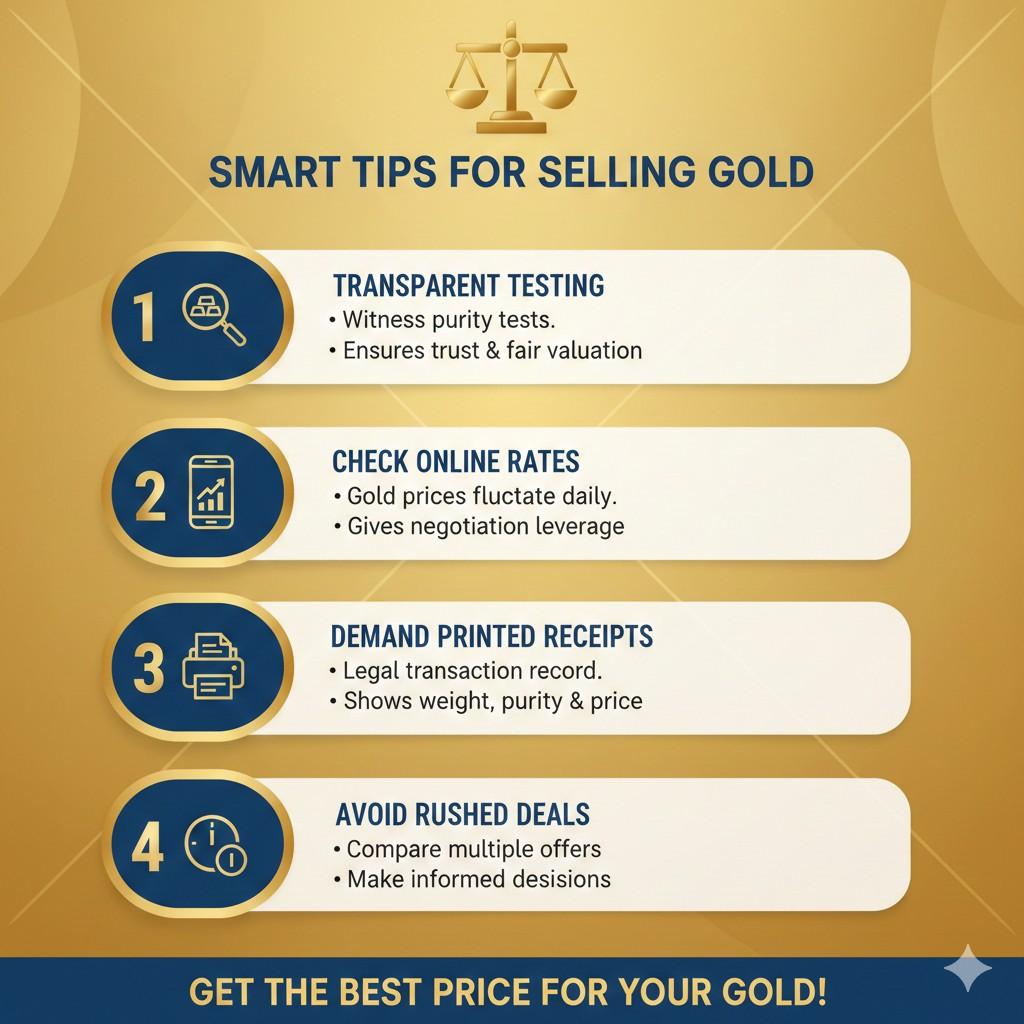
1. Visit buyers who test the gold in front of you
Always choose a buyer who tests the purity of your gold in your presence.
- Why it matters: This ensures transparency and builds trust. Some buyers might attempt to undervalue gold if testing is done secretly. Watching the testing process helps you verify the purity and weight yourself, so there are no hidden manipulations or deductions.
2. Check gold rates online before going to a buyer
Before visiting any buyer, check the current gold rate using reliable websites or mobile apps.
Why it matters: Gold prices fluctuate daily, sometimes multiple times a day. By knowing the latest market rate, you can avoid being offered a price that’s significantly lower than the current market value. This gives you leverage during negotiations and ensures you get a fair deal.
3. Choose centres that give printed receipts
Only sell to buyers who provide a detailed, printed receipt showing weight, purity, and price.
Why it matters: Printed receipts provide a record of the transaction, protecting you legally and financially. They also make the process transparent, showing exactly how the final price was calculated, which prevents misunderstandings or disputes later.
4. Avoid buyers who rush you to sell quickly
Take your time to evaluate any offer and never feel pressured to sell immediately.
Why it matters: High-pressure tactics are often used by buyers who may not offer the best price. By pausing and comparing multiple quotes, you can make a more informed decision and ensure you get the highest value for your gold.
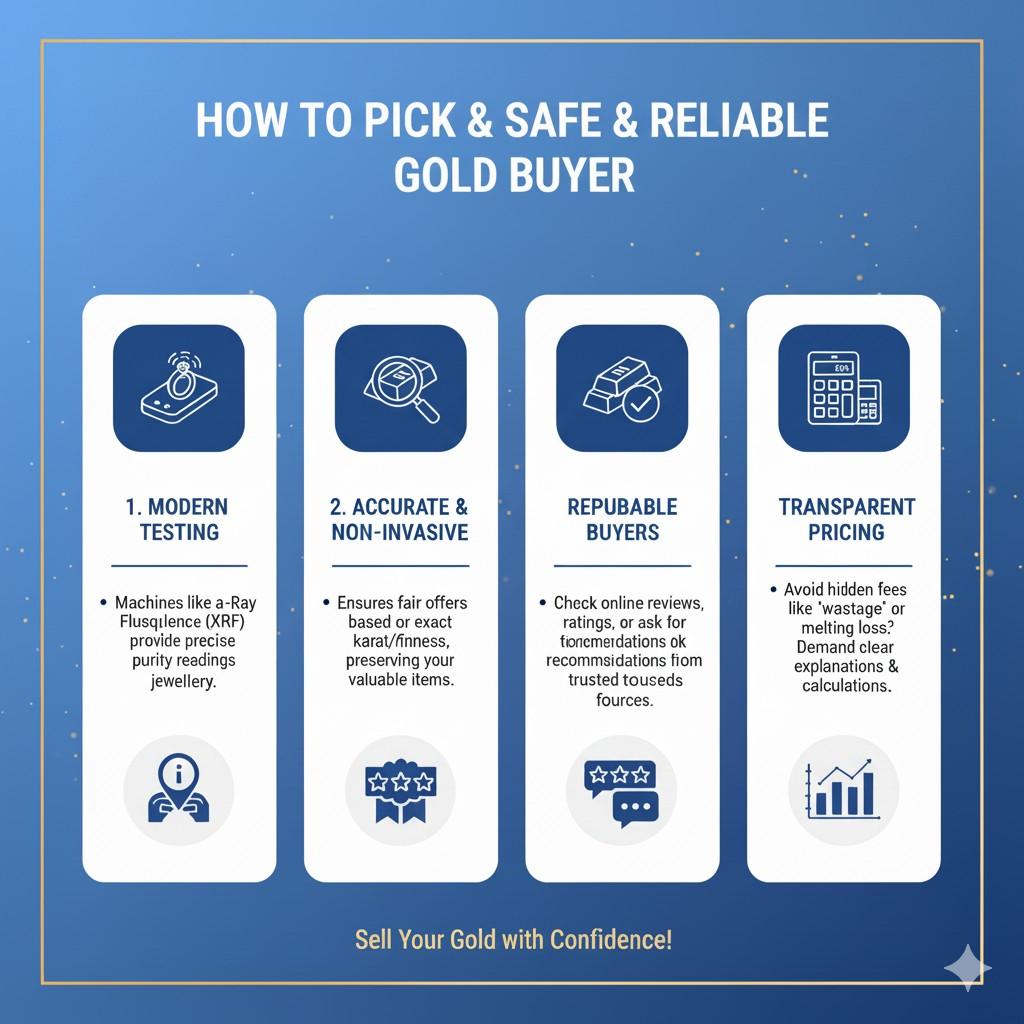
How to Pick a Safe and Reliable Gold Buyer In Kerala
1. Look for centres that use modern testing machines
Modern gold testing machines, such as X-ray fluorescence (XRF) analyzers, provide precise readings of purity without harming your jewellery. Unlike traditional methods that may require scratching or melting the piece, these machines preserve the gold while giving you confidence in the accuracy of the valuation.
2. These show accurate purity without damaging the jewellery
Accuracy is crucial when selling gold because even a small miscalculation can lead to a significant loss. By using non-invasive modern machines, buyers can determine the exact karat or fineness of your item, ensuring you receive a fair offer without risking any physical damage to your valuable jewellery.
3. Choose buyers with clear reviews or local reputation
A buyer’s reputation is often the most reliable indicator of trustworthiness. Checking online reviews, ratings, or asking for recommendations from friends and family helps you gauge how transparent and fair a buyer is, and whether they honor their promises regarding rates and payment.
4. Avoid places that charge “wastage” or “melting loss” without explanation
Some buyers deduct extra amounts claiming wastage or melting loss, but not all of them provide a clear breakdown. A trustworthy buyer will explain why each deduction is applied, how it’s calculated, and show you the actual weight and purity used in the calculation, so you know exactly what you’re getting paid for.
Final Thoughts
Selling gold confidently in Kerala simplifies to four key actions that ensure a transparent and fair transaction.
Firstly, always demand purity checks in your presence, using modern, non-destructive tools like XRF machines on a verified scale, and insist on a clear explanation of all deductions for stones or impurities. This step is critical as it establishes the true net weight and purity (usually 22K) which dictates the intrinsic value of your item.
Secondly, secure the best possible return by comparing offers from multiple, reputable buyers after checking the day’s live 22K gold rate. Once an offer is made, ask for a detailed, itemized breakdown showing the gross weight, net weight, purity percentage, and the exact rate used, ensuring there are no hidden fees. Finally, choose a safe and certified buyer and complete the process at their physical store with all necessary KYC documents (like ID proof and PAN card) to receive secure, transparent payment, typically via bank transfer.
Understanding the process of how to sell gold in Kerala empowers you to get the highest possible value for your asset with complete peace of mind.
Frequently Asked Questions
What is the maximum cash amount I can receive for selling gold in Kerala?
As per Indian Income Tax regulations, any single cash transaction exceeding ₹2,00,000 (Two Lakh Rupees) is illegal and attracts heavy penalties for the buyer. For transactions above this amount, the payment must be made through a secure electronic method like Bank Transfer (NEFT/RTGS) or UPI, ensuring a safe and traceable record.
What is a 'Pavan' and how many grams is it, since this is a common term in Kerala?
A ‘Pavan’ (or Sovran/Sovereign) is a traditional unit of weight widely used in Kerala and South India. One Pavan is equivalent to 8 grams of gold. When checking market prices, you should compare the rate per gram to ensure the buyer’s Pavan rate is calculated correctly (8 times the per-gram rate).
Are gold testing (XRF) and valuation services free?
Yes, most reputable gold buying centers that use modern, non-destructive machines like XRF (X-ray Fluorescence) offer the purity testing and valuation for free. Be cautious of any buyer who tries to charge a fee for a simple purity check before you have agreed to sell.
Is it better to sell my gold when the 22K rate is high or when the 24K rate is high?
Since your jewellery is typically 22K (91.6% pure), you should primarily track the 22K rate. However, both rates move in tandem. The final price you get is based on the purity of your gold (e.g., $91.6\%$ purity) multiplied by the current market rate for 24K gold, so paying attention to the daily rate fluctuations is key.
Can I sell gold that has gemstones, diamonds, or beads in it?
Yes, you can. Professional buyers will deduct the weight of the non-gold items (stones, lac, thread, etc.) to arrive at the net gold weight. The valuation is strictly based on the weight and purity of the gold alone, and the buyer may return the stones to you or offer a negligible separate value for them.
What is the 'Wastage' or 'Melting Loss' charge often deducted? Is it legitimate?
Legitimate deductions for ‘melting loss’ (or refining loss) may occur, typically ranging from 2% to 5% of the gross weight, as there is always a small loss when refining old jewellery. A trustworthy buyer must clearly explain this percentage, show you the net weight after deduction, and include it transparently in the final calculation receipt. Avoid any buyer who applies a vague or excessively high deduction without a clear breakdown.
What documents are absolutely mandatory for selling gold in Kerala?
The most essential documents are:
- Valid Photo ID: Aadhaar Card, PAN Card, or Driving License.
- Address Proof: Usually covered by Aadhaar Card or Driving License.
This is required for KYC (Know Your Customer) and to ensure the transaction is legal and secure. The original purchase bill is helpful but usually not mandatory to complete the sale.
Written by LIjo James